Why Body Shape Categories Genuinely Have a Real Limitation Worth Knowing Before Using Them
Body-shape systems like the classic pear, apple, hourglass and rectangle categories are genuinely useful as a general styling starting point, but they carry a real and worth-knowing limitation: a considerable number of actual bodies don’t cleanly fit any single one of those categories, and the standard system doesn’t handle that in-between reality especially well.

Why the Standard Category System Genuinely Struggles With In-Between Bodies
The classic shape categories were built around a small number of idealized, clearly distinct proportion patterns, but real bodies vary continuously along several proportion dimensions at once, meaning a genuinely large share of actual bodies sit somewhere between two categories rather than matching either one cleanly, and forcing a body into the nearest single category can produce styling advice that doesn’t actually fit that body’s real proportions.

The Specific Limitation Actually Involved
The categories treat shape as one single fixed label per body, when the more accurate reality is that different proportion relationships — shoulder-to-hip, waist definition, torso-to-leg ratio — can each independently lean toward different categories within the same individual body, meaning a single shape label genuinely can’t capture that multi-dimensional reality with full accuracy.
Using Body-Shape Advice Usefully Despite This Limitation
Rather than forcing a body into the single nearest overall category, apply shape advice dimension by dimension specifically — following waist-definition advice from one category’s guidance while following shoulder-to-hip balance advice from a different category’s guidance, whichever specifically matches that individual proportion relationship — which genuinely produces more accurate and useful styling advice than committing to one single overall shape label.
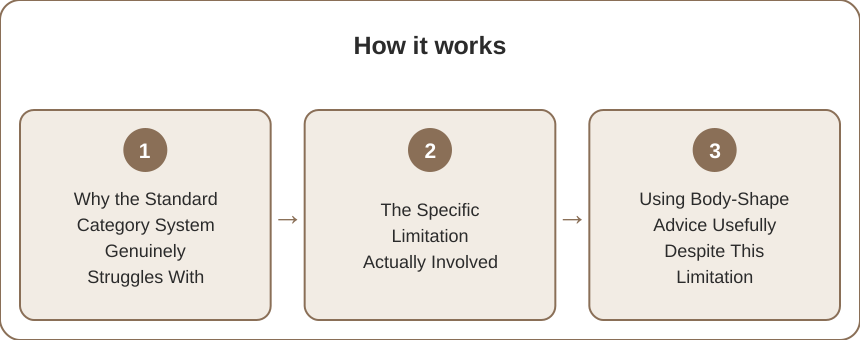
The classic body-shape category system genuinely struggles to represent the considerable number of real bodies that don’t cleanly fit any single category, since it treats shape as one fixed label per body when different proportion relationships within the same person can each independently lean toward different categories, so applying shape advice dimension by dimension — matching waist advice from one category and shoulder-to-hip advice from another, whichever actually fits — produces more genuinely useful styling guidance than forcing a body into one single overall shape label.
Keep Reading
This article is for general styling and informational purposes only. Trends, sizing, availability and pricing may vary by brand and season.