The Neckline Decoder: Choosing Tops by What Happens Above the Waist
The neckline decides more than any other line above the waist — the face framed, the shoulders read, the torso proportioned — and choosing by effect beats choosing by habit. The neckline decoder: the mechanics, the guide and the audit.

The Effect Mechanics
What necklines do: the face-framing function (the neckline being the face’s stage — the shape echoing or contrasting the jawline; the near-face real estate per the palette logic), the vertical-horizontal axis (the V-and-scoop drawing DOWN — the lengthening read; the bateau-and-crew drawing ACROSS — the widening read per the vertical logic; the neither being good or bad: the effects being tools), the balance instrument (the neckline balancing the below — the wide neck over the narrow skirt, the V over the full trouser per the proportion logic), the skin-as-panel concept (the exposed triangle-or-band reading as a design element — the coverage as composition per the coverage logic), and the bust interaction (the necklines sitting differently by bust — the gape-and-coverage practicalities per the fit logic; the wrap adjustability advantage per the wrap logic).

The Neckline Guide
Line by line: the V-neck (the universal lengthener — the deep-V drama versus the modest-V polish; the necklace stage per the accessory logic), the crew neck (the classic that suits high-contrast simplicity — the crew-and-statement-earring formula; the layering base per the layering logic), the scoop (the softer lengthener — the balance of V’s effect with round’s ease), the bateau-boat neck (the shoulder-elegance line — the French-classic horizontal per the classic logic; the balance-below awareness), the square neck (the structured romance — the collarbone frame; the current-classic tier), the turtleneck (the column completer — the sleek vertical per the column logic; the face-framing solid), the cowl-and-draped (the fluid softness — the evening lean per the occasion logic), the off-shoulder and one-shoulder (the statement lines — the occasion drama per the statement logic), the collar family (the shirt-collar polish — the layering instrument per the white-shirt logic), and the halter (the shoulder-showcase — the summer-evening tier).
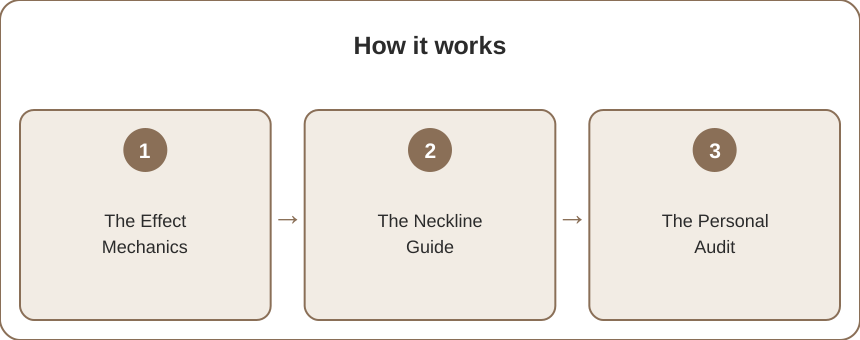
The Personal Audit
Finding YOUR lines: the try-on session (the same-outfit-different-necklines comparison — the photos per the fit-photo logic; the face-and-shoulders watched, not the habit), the effect-goal matching (the lengthening-wanters testing Vs and scoops — the shoulder-lovers testing bateaus and squares; the goals from YOUR preferences per the individual logic), the wardrobe inventory (the current neckline census from the inventory logic — the accidental-crew-monopoly discovery being common; the variety injection), the face-shape interaction (the echo-versus-contrast experiments — the guidelines held lightly per the rules logic), the jewelry coordination (the necklace-neckline pairs — the V-plus-pendant, the crew-plus-collar, the bare-plus-earring rules per the accessory logic), the comfort veto (the tugged-at neckline failing regardless of theory — the fidget test per the comfort logic), and the closing frame (the neckline chosen by effect — the face framed, the balance built, the habit broken; the tops, decoded above the waist). Test in photos, match to effect, break the crew monopoly: the neckline, decided.
Necklines are tools: V and scoop draw down and lengthen, bateau and crew draw across, turtlenecks complete columns, squares frame collarbones — chosen by effect, not habit. Run the audit: same outfit, different necklines, photographed; census your closet (the accidental crew monopoly is common); pair jewelry to the line — and any neckline you tug at fails regardless of theory.
Keep Reading
This article is for general styling and informational purposes only. Trends, sizing, availability and pricing may vary by brand and season.